
Whoa, that’s wild. I kept seeing weird mint activity on my feed, and I wanted answers fast. My instinct said: dig in before buying. Actually, wait—let me rephrase that: I wanted a repeatable way to check provenance, flows, and fees that didn’t rely on rumor or screenshots. When data is messy, the right explorer becomes your single source of truth, even if it sometimes lies to you in subtle ways.
Seriously, the blockchain is loud. Explorers filter that noise into readable trails of transfers, program calls, and balance shifts. They show how an NFT moved from a mint to market, or how tokens bounced between dozens of wallets before settling. On one hand it’s transparency; on the other hand, you need to know what to ignore — bots, dust transfers, and meaningless memos. Hmm… that learning curve is the thing that surprised me most when I started trading.
Here’s the thing. NFT tracking is less about visuals and more about addresses and metadata. You check the mint address, then the token account activity, then the metadata URI to confirm the image hash. Sometimes marketplaces re-list a token under a new seller address and you have to follow the chain, step by step. My process is simple: check holder history, confirm royalties and creators, and then look at recent sale prices to spot outliers or wash trading.
Okay, so check this out—program interactions tell you more than raw transfers. A marketplace sale will often call a program, split payments, and update escrow accounts within a single transaction. That single transaction can contain ten or more inner instructions, and if you only see the outer transfer you miss who took fees and why. I use filters to expand inner instruction visibility and to flag program IDs I trust, and somethin’ about that granularity keeps me calm in fast markets. It’s not perfect though; sometimes data lags or explorers index inconsistently.
Really curious about tokens? Me too. Token tracking on Solana is a slightly different animal than NFTs. You want to check total supply, decimals, mint authority, freeze authority, and recent mint events before touching a new SPL token. Also watch holders distribution — if the top 5 wallets hold 95% you should probably step back. The token ledger exposes these things plainly, so paying attention is actually easy once you know where to look.
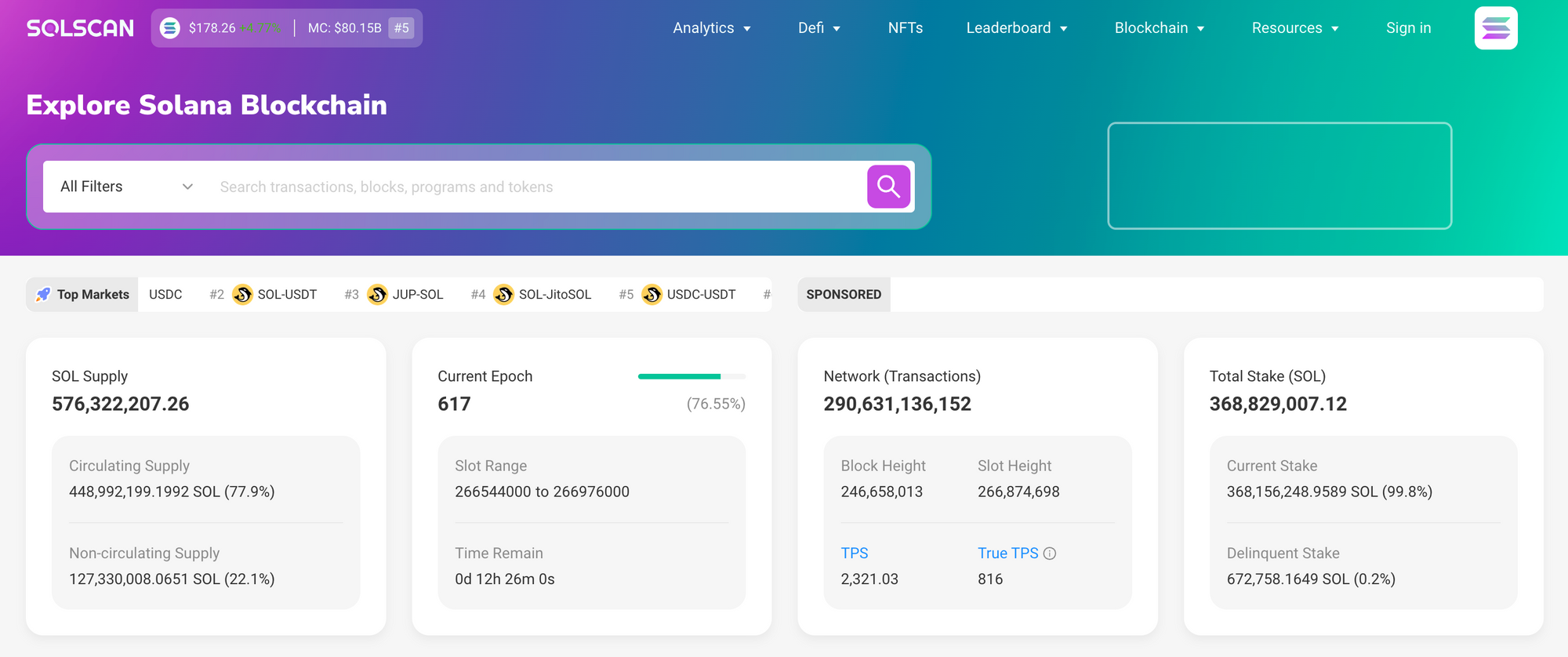
I recommend a trusted explorer when you’re doing this work. I often use solscan because its transaction detail and token tabs give quick visibility, and the search ergonomics are clean for quick triage. That said, reliance on any single tool is a risk; cross-checks with other explorers or RPC queries help when something smells off. I’m biased, but solscan has saved me from buying into a rug twice now, so yeah — it’s earned a spot in my workflow.
Whoa, small tangent — wallet labeling changes everything. When you label known market makers, bridges, and liquidity pools you stop wasting time. I label manually and import lists; it’s tedious but helpful. On the other hand, labels can deceive if they’re wrong — a mislabeled scam wallet is a fast path to bad decisions. So I cross-reference on-chain evidence and community reports before trusting labels blindly.
Hmm… transaction fees matter more than folks admit. SOL fees are tiny compared to Ethereum, but spikes occur during congestion and can undo small trade margins. Watch the “fee payer” field and lamports spent, and check for retries due to blockhash expirations if a transaction failed. Initially I thought fees were negligible, but then a failed swap triggered multiple retries and suddenly I had three fees where I expected one — lesson learned, the hard way.
Okay, some quick troubleshooting heuristics I use everyday. If a transfer is missing, check both the sender and receiver token accounts — token accounts are often created after the transfer, so a naive search misses the token. If a marketplace sale shows zero SOL movement, look for wrapped SOL or escrow program transfers instead. If a mint looks fake, examine the creator addresses and metadata URI chain for third-party hosting. These rules don’t cover everything, but they catch most common gotchas.
On deeper analysis: watch inner instructions, program logs, and account changes simultaneously. A single complex transaction can move tokens, update metadata, and call multiple programs in one block. Tracing these requires patience and occasionally RPC calls to fetch historical account states when the explorer’s indexer misses something. Initially I thought explorers gave the full picture, but actually the raw RPC data sometimes tells a fuller story — though it’s heavier to work with.
Here’s what bugs me about over-reliance on visual summaries: you get comfortable and miss the nuance. A price history graph doesn’t reveal hidden mints or concentrated ownership. A long tail of tiny transfers can indicate wash trading or automated dusting. So my habit is to start with the headline, then peel back layers until I either understand the pattern or hit an unknown that requires more research. It’s methodical, and very very occasionally tedious, but it prevents rookie mistakes.
Practical tips and quick wins
Short checks first: confirm mint, verify creators, eyeball holder concentration, and scan recent sales for outliers. If you care about swaps, also inspect the AMM or router program IDs interacting in the trade. For persistent monitoring, set a watchlist on addresses and tokens you care about and enable alerts for incoming transfers. Watch confirmations — single-confirmation status versus finalized states matters if you’re arbitraging or bridging. I’m not 100% sure my setup is optimal, but it’s robust enough for daily use and for sharing with friends without embarrassment.
FAQ
How do I confirm an NFT’s legitimacy?
Check the mint address first, then the metadata URI and creators array. Verify the creator wallets against known artist addresses, and look at the first few holders to see if drops landed with expected participants or a weird handful of addresses. Cross-check sales history and program calls for marketplace signatures.
What flags suggest a suspicious token?
Concentrated supply, hidden mint authority, sudden large mints, and unusual holder churn are red flags. Also beware tokens with lots of wallet creation but no real trading volume — that often signals wash setups. If the token’s social or contract info is sparse, assume higher risk.
How can I troubleshoot a failed SOL transaction?
Look at the blockhash expiry, fee payer, and inner instruction logs. If it retried, you’ll see multiple signature attempts; if it failed due to an instruction error, the explorer’s logs usually show the program error code. Sometimes re-submitting with a fresh blockhash and slightly higher fee fixes it.