

Whoa, this hits differently. I’ve spent years poking around Solana explorers and token trackers. They tell stories about on-chain flows and project lifecycles. At first glance a block explorer looks like a block of dry numbers, but when you dig deeper it reveals user behavior, liquidity patterns, rug pulls, and subtle protocol signals that most people miss. My instinct said there was more to learn from the tools than the headlines.
Seriously, that matters a lot. Token trackers are the GPS for token economies on Solana. You want to see mint history, transfer clusters, and holder concentration quickly. When a whale moves a large balance across multiple accounts, the visualizations and token event timelines can often give you an edge if you know how to interpret pattern anomalies versus normal trading noise. I’ll be honest, sometimes charts lie until you cross-check on-chain records.
Hmm, performance matters here. Solana’s speed demands explorers that keep up and remain accurate. I’ve seen slow crawlers fall behind during high TPS windows and mislead users. Good explorers reconcile slot confirmations, show real-time transaction status, and surface program logs so developers and traders can trace failures or suspicious interactions down to the instruction level where the real action often happens. Something felt off about some UIs I used early on, frankly.
A practical place to start
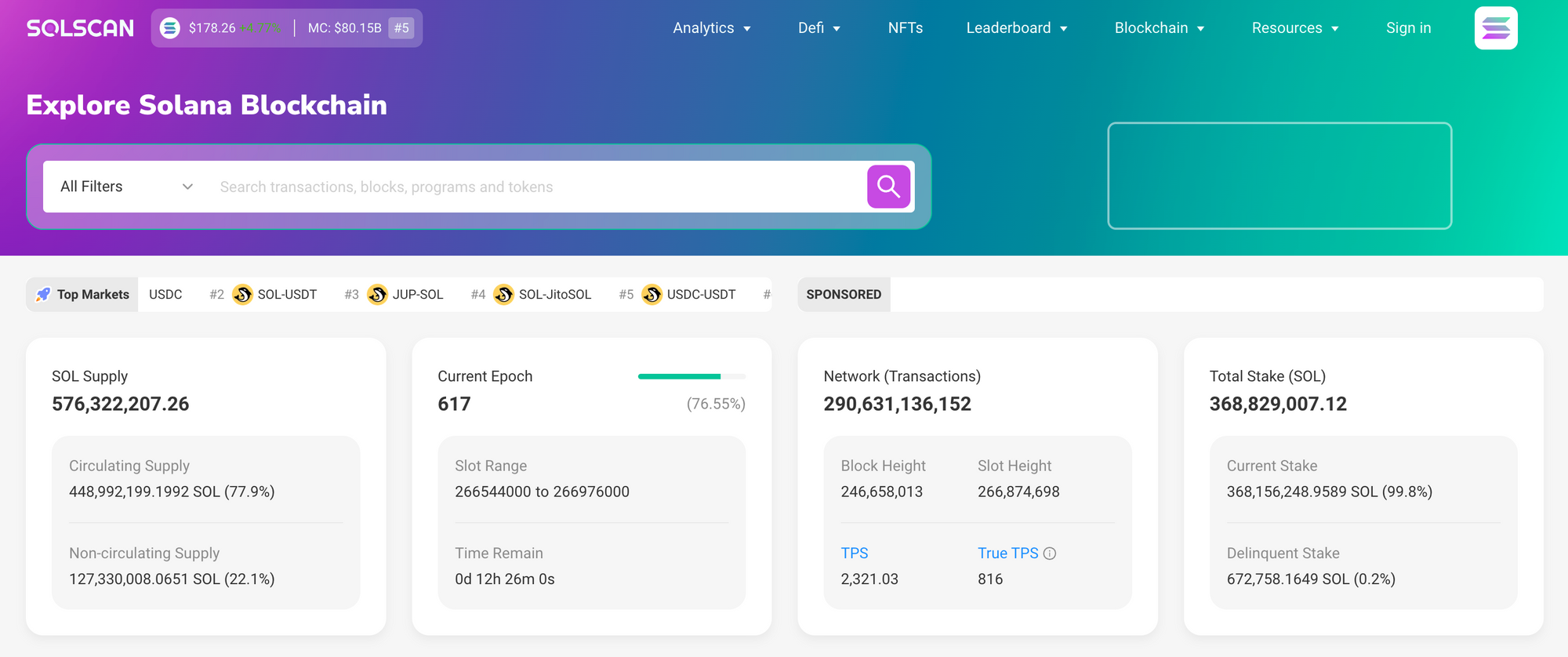
Wow, Solscan grew fast. I switched between explorers and landed on one that felt polished. You can check their dashboards, token pages, and analytics tools for free. If you want a reference point for a modern Solana explorer with token tracking, historical holder breakdowns, and a clean transaction inspector, try this site here and judge for yourself; it helped clarify a few mysteries for me when tracing market-moving transfers. On a side note, I’m biased, but their UX smoothed my workflow.
Really, analytics change decisions. Analytics go beyond pretty charts to statistical signals and alerts. On Solana, on-chain metrics like token age and active supply tell you who’s accumulating. Aggregation across AMMs, DEX swaps, and staking flows creates composite indicators that, when properly normalized for volume and slot timing differences, can anticipate momentum shifts earlier than off-chain price tickers. I’m not 100% sure about every signal, but they help frame hypotheses.
Okay, so check this out— Start by bookmarking token pages and saving common queries. Use holder distribution, major transfers, and mint events as red flags. If a newly minted token shows immediate large transfers to multiple exchange addresses or anonymous wallets, that’s often correlated with fast dumps or front-running bots, so treat liquidity snapshots with caution and verify on-chain receipts for legitimacy. Also, check program logs to see instruction traces when transactions revert or behave oddly.
Hmm, developers love this. Program logs are a goldmine when debugging contract interactions. You can follow CPI calls and identify which instruction caused a state change. Tracing instructions across cross-program invocations requires patience and context, though, because a single transaction may call dozens of programs and the semantic meaning of each log entry depends on program internals that explorers surface but don’t fully interpret for you. One time I traced a payment failure back to a fee miscalculation.
Here’s the thing. Explorers are only as good as their indexers and RPC nodes. Outages, forks, and reorgs can briefly distort views of on-chain history. Cross-check results by querying multiple RPC endpoints, scanning raw transaction bytes when possible, and comparing time-ordered slot confirmations because the network’s parallelization can present ordering challenges that matter when tracing arbitrage or sandwich attacks. I’m biased toward transparency, so raw logs help build trust.
Wow, DeFi gets creative. Teams now build tooling to monitor real-time liquidity shifts and MEV patterns. Token trackers feed alerts when top holders move or when supply dilutes suddenly. As institutional flows grow on Solana, analytics that combine on-chain signals with orderbook depth and off-chain listings will be the differentiator for desks that need anticipatory risk controls instead of reactive reporting. I don’t pretend to predict everything, but patterns repeat often enough to matter.
Really, it’s empowering. A good explorer turns opaque transfers into actionable insights. You learn to read on-chain narratives and to question quick price signals. Initially I thought explorers were just lookup tools, but then I realized they are analytical microscopes that, when used thoughtfully, change how you assess risk, judge token health, and decide when to enter or exit positions in a high-speed market where every slot can matter. So try the tools, poke around, and keep asking why; somethin’ always shows up.
FAQ
Which explorer should I trust for Solana?
Trust is layered. Use multiple explorers and cross-verify suspicious activity. One site may index differently or lag during spikes, so combine sources and query raw transactions when unsure.
How do I spot a likely rug or dump?
Look for large concentrated holder transfers, rapid wallet clustering, and immediate exchange movements after minting. Also check token contract behavior and program logs for unexpected instructions or permission patterns. Oh, and by the way… watch token age and tiny-sale cascades; they often precede drama.